The Role of Social Media in Growing Your Artistic Career
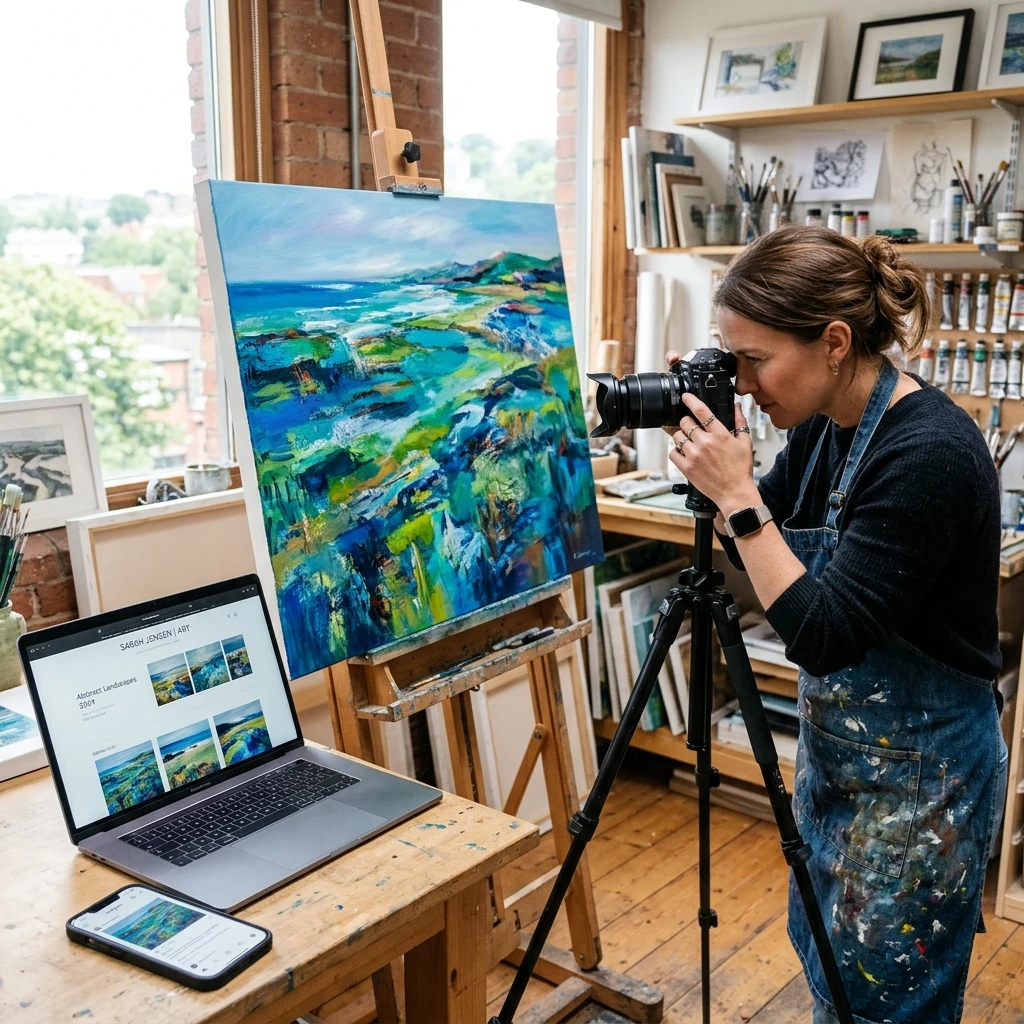
Social media can help artists share their work, reach new audiences, and build professional connections. Used with intention, it acts as a public-facing studio window: people can discover your art, follow its development, and find their way to your artist portfolio. It cannot guarantee recognition or income, but it can make your work easier to encounter.
How social media can support an artist’s career
Social media supports an artist’s career by making work visible, helping audiences understand the person and process behind it, and creating opportunities for connection. Its value comes from consistent discovery and meaningful relationships, not from a promise of instant fame.
A post can introduce a painting, sculpture, photograph, illustration, or performance to someone outside your existing circle. Over time, a clear body of posts helps people recognize your interests and visual language. That familiarity can lead viewers to share your work, attend an exhibition, subscribe to updates, or explore your portfolio.
Social platforms can also help artists meet peers, curators, clients, galleries, and arts organizations. Treat these as possible outcomes, not guaranteed results. The platform is only one part of a professional presence; a well-organized portfolio, reliable contact information, and thoughtful follow-up still matter.
Think of social media as a discovery and relationship channel. It brings people to the first conversation. Your artwork, context, and professionalism give them a reason to continue it.
Choose platforms that fit your art and goals
Choose social media platforms by matching their formats and audiences to your artwork and goals. You do not need to be active everywhere; one platform you can use well is often more useful than several neglected profiles.
Consider how your work is best experienced. Image-led platforms can suit painters, illustrators, photographers, and makers who want to present finished pieces and studio details. Video platforms may help performance artists, animators, or artists whose process changes over time. Text-focused spaces can support discussion, research-led practice, and professional commentary. Platform features and audience habits change, so review current options before committing.
Use a simple filter before choosing:
- Format: Can the platform show your work clearly, at the scale and pace it needs?
- Audience: Are the people you hope to reach likely to spend time there?
- Capacity: Can you create posts for it without taking too much time from making art?
Try one primary platform for a set period, such as eight to twelve weeks, and notice which posts prompt relevant conversations or portfolio visits. You can add another channel later if it serves a distinct purpose. Avoid choosing a platform simply because another artist has a large following there.
Share work in ways that tell a story
Artists can tell a stronger visual story by sharing finished work alongside selected process, context, and works in progress. These formats give viewers different ways into the practice without requiring you to document every studio session.
A finished piece gives people a clear view of the work. A detail crop can draw attention to texture, line, or material. A short process clip may show a technique that a final image cannot explain. A caption can add the title, medium, dimensions, year, or the question that shaped the piece. Choose details that deepen the viewer’s understanding rather than adding background for its own sake.
For example, a ceramic artist might post a finished vessel, then a brief image sequence showing the surface before and after glazing. A concise note about the firing process gives context; a link to the portfolio lets an interested viewer see the broader series. This is visual storytelling in practical form: artwork first, supporting details second, next step made clear.
Keep the portfolio as the authoritative record of selected work. Social posts can be informal and in progress, while the portfolio should present a considered selection with accurate captions and current contact details. Do not feel obliged to share unfinished work if it makes you uncomfortable or reveals a process you prefer to keep private.
Build genuine audience engagement
Genuine audience engagement grows when artists respond thoughtfully, invite relevant conversation, and treat followers as people rather than numbers. A small, interested online community can be more useful to your practice than a large audience with little connection to the work.
Reply to specific questions about materials or process when you can, thank people for sharing your work, and take part in conversations with fellow artists and arts organizations. You might ask a focused question about a series, such as which detail viewers noticed first. Avoid asking for engagement on every post; repeated prompts can feel less like conversation and more like a demand.
Set boundaries that protect your time. You could check notifications once a day for 15 minutes, or reserve two short sessions each week for replies. You are not required to answer every message, disclose personal details, or turn every exchange into a sales conversation. Healthy engagement is reciprocal but bounded: be present in ways that suit your work and wellbeing.
Notice the quality of interaction as well as its volume. A thoughtful question from a curator, a local invitation, or a conversation with a potential collaborator may matter more to your career than dozens of brief reactions.
Connect social profiles to your artist portfolio
Connect social profiles to your artist portfolio with a clear, working portfolio link and a profile description that tells visitors what they will find there. This gives people a direct route from discovering a post to exploring your work and contacting you.
Make the next step easy. Use a concise bio that identifies your medium or practice, your location if relevant, and a link to your portfolio. Check that the link opens correctly on a phone, since many visitors will arrive on mobile. If you use a landing page with several links, put the portfolio near the top and label it plainly.
Your portfolio should make a strong first impression without forcing visitors to search. Include selected projects or series, clear images, useful captions, and an up-to-date contact route. If you are seeking commissions, exhibitions, or representation, make the relevant information easy to find. A social profile can introduce you, but your portfolio provides the fuller professional picture.
Review the connection occasionally: remove outdated links, update a completed exhibition or project, and ensure your profile image and name are recognizable across channels. These small checks reduce friction for someone who wants to learn more or make an inquiry.
Create a sustainable social media routine
A sustainable social media routine is one you can maintain without crowding out studio time. Start with a modest schedule, prepare posts when convenient, and adjust it based on your workload and results.
For instance, choose one or two posts a week and use material you already have: a finished-work image, a studio detail, or a short note about a project. Keep a small bank of photographs and caption ideas so you are not forced to invent content when deadlines are tight. Scheduling tools can help, but they are optional; a simple calendar or reminder may be enough.
Use a make–document–share rhythm: make the work first, document only useful moments, then share selectively. This keeps content connected to the practice rather than turning the practice into a constant production for feeds. Some weeks will be quieter, and that is normal. A break during an exhibition installation, commission, or demanding period does not erase your career.
Watch for signs that the routine is costing too much: frequent interruptions in the studio, anxiety about posting, or a growing backlog of content tasks. Reduce frequency, batch documentation, or pause a channel. Consistency should mean a dependable approach over time, not daily posting at any cost.
Measure progress beyond follower counts
Measure social media progress through signals tied to your goals, including meaningful engagement, portfolio visits, and relevant inquiries. Follower counts can show reach, but they do not reveal whether the right people are finding your work.
Choose a few indicators to review monthly. These might include saves or shares on artwork posts, profile visits, clicks on your portfolio link, newsletter sign-ups, or messages about exhibitions and commissions. If your goal is local visibility, track invitations and attendance at nearby events. If you are building a peer network, note substantive conversations and collaborations.
Look for patterns rather than judging a single post. If process images bring thoughtful questions but few portfolio visits, keep them as community content and make the portfolio link more visible in your profile. If a series attracts relevant inquiries, consider featuring the complete series prominently on your portfolio. This is a practical feedback loop, not a demand to reshape your art around analytics.
Social platforms provide incomplete measures and can change how posts are distributed. Use their data as clues, alongside your own records and professional goals. Success is the quality of attention and opportunity, not a universal follower threshold.
Frequently asked questions
Which social media platform should an artist use?
Use the platform that best presents your art, reaches the audience you care about, and fits the time you can give it. Artists do not all need the same channel. Test one primary platform and review whether it leads to useful engagement or portfolio discovery.
What should artists post on social media?
Share finished work, selected works in progress, process details, and context such as materials or the ideas behind a series. Keep posts aligned with your practice, and direct interested viewers to your portfolio for a fuller selection.
How often should artists share their work?
Post at a pace you can sustain alongside making art. One or two thoughtful posts a week may be a workable starting point, but the right schedule depends on your practice and available time. Useful, consistent updates matter more than forcing a daily post.
How can social media direct people to an artist portfolio?
Add a working portfolio link to your profile, label it clearly, and mention it when a post introduces a relevant project or series. Check the link on mobile and make sure the portfolio includes current artwork and contact information.