SEO Tips for Artists: How to Make Your Portfolio Discoverable Online
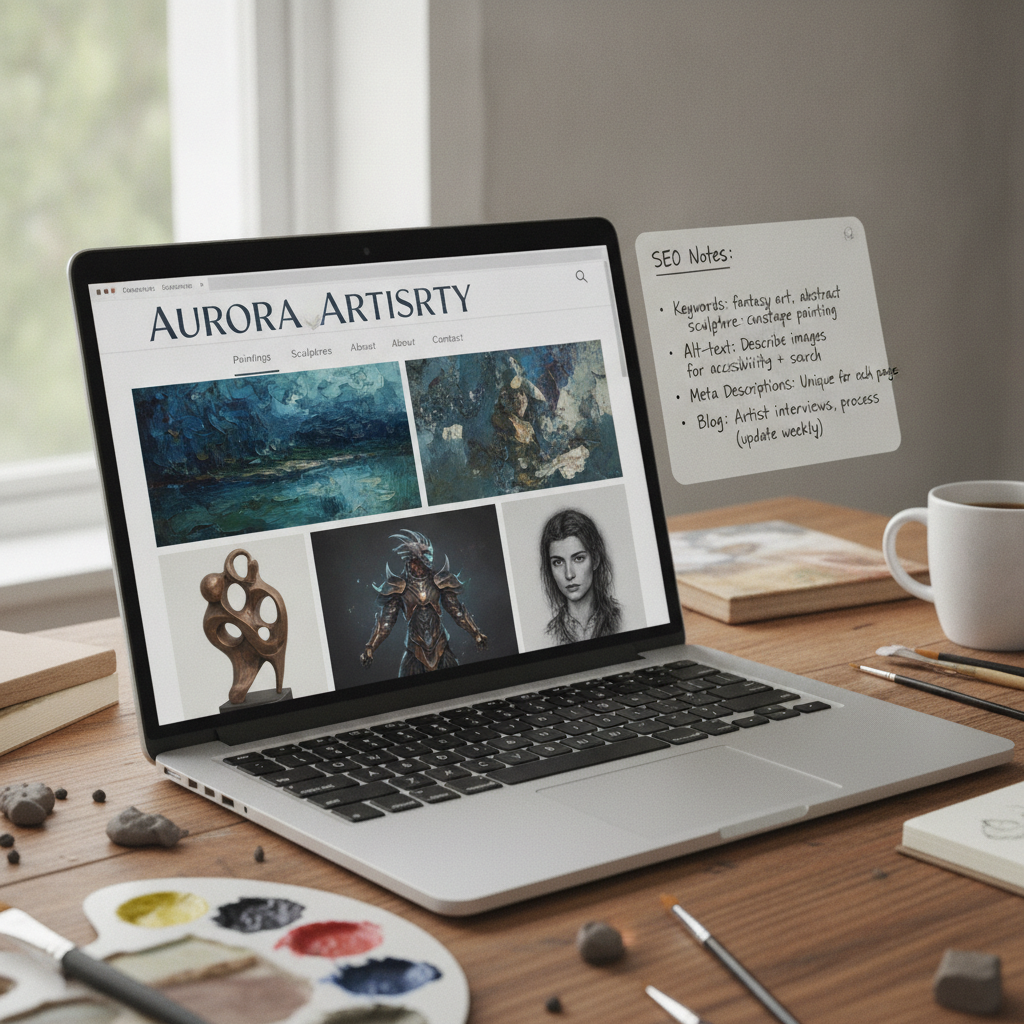
A strong artist portfolio website needs more than beautiful work. Search engines and visitors must quickly understand what you create, which services you offer, and where you work. The right SEO strategy helps collectors, galleries, clients, curators, and collaborators find relevant portfolio pages without weakening your artistic voice.
SEO for artists is an ongoing process rather than a one-time technical fix. Start with language your audience actually uses, improve the pages that showcase your work, and review the results regularly. Small changes to artwork titles, descriptions, images, and navigation can make a portfolio easier to discover and easier to use.
Start With the Right Keywords for Your Art
Keyword research helps artists identify the specific phrases potential visitors use when searching for a medium, style, service, subject, or location. The best keywords match both your work and the visitor’s search intent.
Begin with a simple list of phrases that describe your practice. Combine your medium with a subject, style, service, or place. For example:
- contemporary watercolor landscape artist
- ceramic sculpture artist in Portland
- editorial illustrator for environmental publications
- abstract portrait painter available for commissions
- black-and-white architectural photographer in Chicago
Specific phrases usually serve an artist better than broad terms such as artist or painting. A person searching for a “botanical ink illustrator for book projects” has a clearer need than someone searching for “art.” This is the connection between keywords and search intent: your page should answer what the visitor is trying to find.
Consider four keyword groups: what you make, how you make it, who it is for, and where you work. Review gallery websites, art directories, exhibition listings, and autocomplete suggestions for natural wording. Avoid chasing unrelated trends or repeating one phrase unnaturally. Choose a primary topic for each important page, then use close variations in the copy.
Optimize Every Portfolio and Artwork Page
To optimize a portfolio page, give it a clear title, descriptive headings, a readable URL, useful artwork descriptions, and accurate metadata. Each page should explain its subject to search engines and human visitors within seconds.
A page title might be “Landscape Watercolors by Maya Chen” rather than “Gallery 1.” The heading can identify the collection, while the introductory paragraph explains the medium, themes, location, or commission type. Artwork titles should remain distinctive and meaningful, but add supporting context when a poetic title alone would be unclear.
For each artwork page, include details such as:
- the artwork title, medium, dimensions, and completion date where relevant;
- the subject, setting, technique, or concept;
- the project’s audience or client when permission allows;
- availability, commission information, or exhibition history if applicable.
Use one concise page title, one main heading, and logical subheadings. Write a meta description that summarizes the page rather than listing keywords. For example, “Explore hand-built stoneware vessels inspired by coastal geology, created in a small studio in Maine” gives searchers a reason to click.
Keep URLs short and descriptive, such as /ceramic-vessels/coastal-series. Update old pages carefully if a URL changes, and redirect the previous address when your website platform supports it. Descriptive content improves discoverability, but it also helps visitors decide whether your work fits their needs.
Make Portfolio Images Search-Friendly
Image SEO makes artwork easier to understand and helps pages load efficiently. Use descriptive file names, useful alt text, appropriate dimensions, and modern compression while preserving the visual quality that matters in an artist portfolio.
Rename files before uploading them. A file called ceramic-vessel-blue-glaze.jpg gives more context than IMG_4832.jpg. Use lowercase words and hyphens, and describe what the image shows without stuffing in every possible keyword.
Alt text supports accessibility and provides a text alternative when an image cannot be viewed. Describe the artwork’s essential visual information in a natural sentence:
- Useful: “Blue stoneware vessel with carved wave patterns on a white pedestal.”
- Weak: “art artist ceramic blue vessel best pottery gallery.”
Do not use alt text to repeat the artwork title if that adds no information. If an image is purely decorative, an empty alt attribute may be more appropriate, depending on how your website editor handles accessibility.
Large, uncompressed images can slow a page, especially on mobile devices. Export images at the largest size visitors genuinely need, compress JPEG, PNG, or WebP files, and avoid uploading a 12-megapixel original for a thumbnail. A compromise exists: excessive compression can damage color, texture, and detail. Test the page on a phone before publishing.
Build a Clear, Searchable Website Structure
A searchable website structure groups related work logically, uses accessible navigation, and connects pages with internal linking. Visitors and search engines should be able to reach important projects in a few clear steps.
Organize your artist portfolio website around meaningful categories rather than upload dates alone. A photographer might separate editorial, portrait, and architectural projects. A visual artist might use paintings, drawings, installations, and commissions. Categories should reflect how your audience evaluates your work.
Link from a collection page to individual artwork or project pages, then link related projects back to the collection. Within a case study, connect to the relevant medium or commission page. Use descriptive link text such as “view the coastal sculpture series” instead of “click here.”
Your navigation menu should work for someone who has never seen your site. Include only the core destinations, such as Work, About, Services, Journal, Exhibitions, and Contact. A mobile-friendly design matters because visitors may discover your portfolio on a phone after seeing your name in a program, article, or social profile.
Check that every important page can be reached through normal links. Orphaned pages, confusing galleries, and image-only navigation can hide valuable work from both users and crawlers. Good structure also creates a calmer viewing experience, which is especially important when the artwork itself carries most of the visual attention.
Improve Visibility With Local and Off-Page SEO
Local SEO and reputable external mentions improve discoverability when your practice depends on a city, region, studio, gallery, or in-person service. Keep your location and professional contact details consistent wherever your work appears online.
Create a location-specific page only when you can offer useful information. A mural artist might describe service areas and project types, while a printmaker could explain studio visits, workshops, or local exhibitions. Avoid creating thin pages for dozens of cities where you have no meaningful connection.
Artist directories, gallery profiles, university pages, exhibition listings, professional associations, and arts publications can provide relevant links and context. Prioritize quality over quantity. A link from a respected regional art institution may be more useful than dozens of unrelated directory listings.
Use the same professional name, website URL, email, studio location, and phone number across profiles. Claim appropriate business or creator listings when they genuinely represent your work. Social profiles can help people find your portfolio and may lead to press coverage or links, although social engagement itself is not a substitute for on-site SEO.
When requesting a link, suggest the most relevant destination. An exhibition announcement should link to the exhibition project page; a commission profile should link to the service or portfolio page. This gives visitors a useful next step instead of sending everyone to the homepage.
Create Content That Supports Your Portfolio
Content supports an artist portfolio by answering questions that artwork thumbnails cannot answer. Process posts, project case studies, exhibition announcements, artist statements, and educational articles can attract visitors at different stages of discovery.
A project case study might explain the brief, research, materials, decisions, and final result. A process article could cover how you prepare a large canvas, build a clay form, light a portrait session, or develop an illustration from sketches to delivery. These topics naturally include specific language that potential clients, editors, collectors, and students may search for.
Write for real questions, not an artificial publishing quota. Useful topics include:
- how a commissioned mural moves from consultation to installation;
- what materials are used in a body of ceramic work;
- how an illustrator prepares artwork for a children’s book;
- what visitors can expect at an upcoming exhibition;
- how a particular series relates to your artist statement.
Give each article a clear title, concise introduction, descriptive headings, original images, and links to related portfolio pages. Update an exhibition announcement when dates or locations change. For finished projects, add the completed work rather than leaving an outdated progress note as the main page.
Track Results and Keep Improving
Use Google Search Console to see which queries display your pages, which pages receive clicks, and where your portfolio may need improvement. SEO progress often appears gradually, so evaluate patterns over several weeks rather than reacting to one day of data.
Connect your website to Search Console, submit your sitemap if available, and review the Performance report. Pay attention to:
- impressions, which show how often pages appear in search;
- clicks and click-through rate, which indicate whether listings attract attention;
- queries, which reveal the language people use;
- top pages, which show which projects earn visibility;
- mobile usability and indexing issues that may prevent access.
Adopt a manageable monthly routine: audit one important portfolio page, improve one image set, check broken links, review new search queries, and update outdated project information. Every three months, compare your strongest pages with pages that receive impressions but few clicks. A clearer title or description may help; a page with no useful content may need a deeper rewrite.
Start today with one page. Replace its vague title, describe the artwork in plain language, rename its images, add two relevant internal links, and test it on a phone. Consistent improvements create a portfolio that is easier to find, understand, and remember.
Frequently Asked Questions About SEO for Artists
How long does SEO take to improve an artist portfolio’s visibility?
SEO can take several weeks to several months to produce noticeable changes, depending on the site’s history, competition, content quality, and number of reputable links. There is no guaranteed ranking timeline. Measure progress through impressions, relevant queries, clicks, and qualified inquiries.
Should artists use their names as keywords?
Yes. Use your professional name naturally on the homepage, About page, page titles, and exhibition profiles. Pair your name with useful context, such as your medium, location, or specialty, because new audiences may search for both the artist and the type of work.
What should alt text for artwork images include?
Alt text should briefly describe the important visual content, including the medium or subject when useful. For example, “Large abstract oil painting with layered red and ochre brushstrokes” is clearer and more accessible than a keyword list.
How often should an artist update their portfolio?
Update it whenever you have strong new work, a completed project, a changed exhibition detail, or outdated contact information. A smaller, carefully edited portfolio is usually more effective than a large archive with weak descriptions and broken pages.
Is social media important for portfolio SEO?
Social media can increase discovery, referrals, and opportunities for coverage, but it does not replace a well-structured artist portfolio website. Use profiles to direct interested people to specific, relevant pages on your site and keep your public details consistent.