The Importance of Personal Branding for Creative Professionals

Creative skill may open the first door, but a clear professional identity helps the right people remember why they should invite you further. For artists, designers, photographers, illustrators, and other creative professionals, personal branding connects your work, values, process, and ambitions into a coherent story.
It does not require turning yourself into an influencer or forcing every project into a commercial formula. A strong personal brand gives your creative work context. It helps a potential client, curator, editor, employer, or collaborator understand what you do, how you think, and whether your approach fits their needs.
What Is Personal Branding for Creative Professionals?
Personal branding for creative professionals is the intentional presentation of your skills, values, style, and professional direction. It shapes how people understand your creative identity across your artist portfolio, portfolio website, social platforms, and professional communication.
Your personal brand is built from visible and less visible signals. The visible signals include your selected projects, visual language, typography, color choices, biography, photography, and tone of voice. The deeper signals include your creative process, preferred subjects, working principles, cultural perspective, and the types of problems you want to solve.
This distinction matters because personal branding is not the same as inventing a persona. If your public image promises experimental editorial illustration but your portfolio contains only unrelated commercial graphics, the gap will weaken trust. The strongest brands usually make existing qualities easier to recognize rather than adding a mask.
Think of personal branding as a lens. Your creative work remains the subject, while the brand helps viewers see its patterns and meaning. It should support strong skills, not compensate for weak ones.
Why Personal Branding Matters in a Competitive Creative Industry
Personal branding matters because it improves recognition, builds professional credibility, and helps creative professionals become associated with suitable opportunities. A clear brand reduces confusion when people compare many talented artists or designers with similar technical ability.
Creative industries are crowded, and decision-makers often review portfolios quickly. A recognizable point of view can make your work easier to recall after a meeting, search, recommendation, or social media visit. Differentiation does not mean being unusual for its own sake. It means showing a specific combination of subject matter, craft, perspective, and experience.
Personal branding also supports trust. Consistent presentation suggests care and reliability, while a focused body of work helps others predict the quality and relevance of a future project. This does not guarantee clients, sales, employment, or audience growth. It creates better conditions for the right conversations.
- Recognition: Repeated visual and verbal cues help people remember your work.
- Relevance: A defined niche makes it easier for suitable clients, galleries, publishers, or collaborators to find you.
- Credibility: A coherent portfolio and clear biography make your experience easier to evaluate.
- Opportunity quality: Strong positioning can discourage mismatched inquiries while attracting projects closer to your goals.
The trade-off is that clarity can feel restrictive at first. If you try to display every ability equally, you may preserve flexibility but lose immediate meaning. A useful brand can leave room for growth while still communicating what you are best known for today.
How Personal Branding Strengthens an Artist Portfolio
Personal branding strengthens an artist portfolio by making its projects feel connected, intentional, and memorable. The goal is not to make every piece look identical; it is to help viewers recognize the thinking and standards shared across different projects.
Start with selection. A portfolio should not function as an archive of everything you have ever made. Choose work that demonstrates your strongest abilities and points toward the opportunities you want next. For example, an editorial illustrator seeking work with magazines might prioritize narrative covers, article illustrations, and visual essays rather than unrelated classroom exercises.
Then improve the presentation. Project titles, short descriptions, role information, process images, and outcomes can explain what viewers are seeing. A designer might describe the problem behind a visual system, while a photographer could explain the intended mood, lighting approach, and relationship with the subject.
Visual identity creates another layer of cohesion. Consistent image treatment, spacing, navigation, typography, and color choices can make an artist portfolio feel professional without overpowering the work. The interface should frame the creative work, not compete with it.
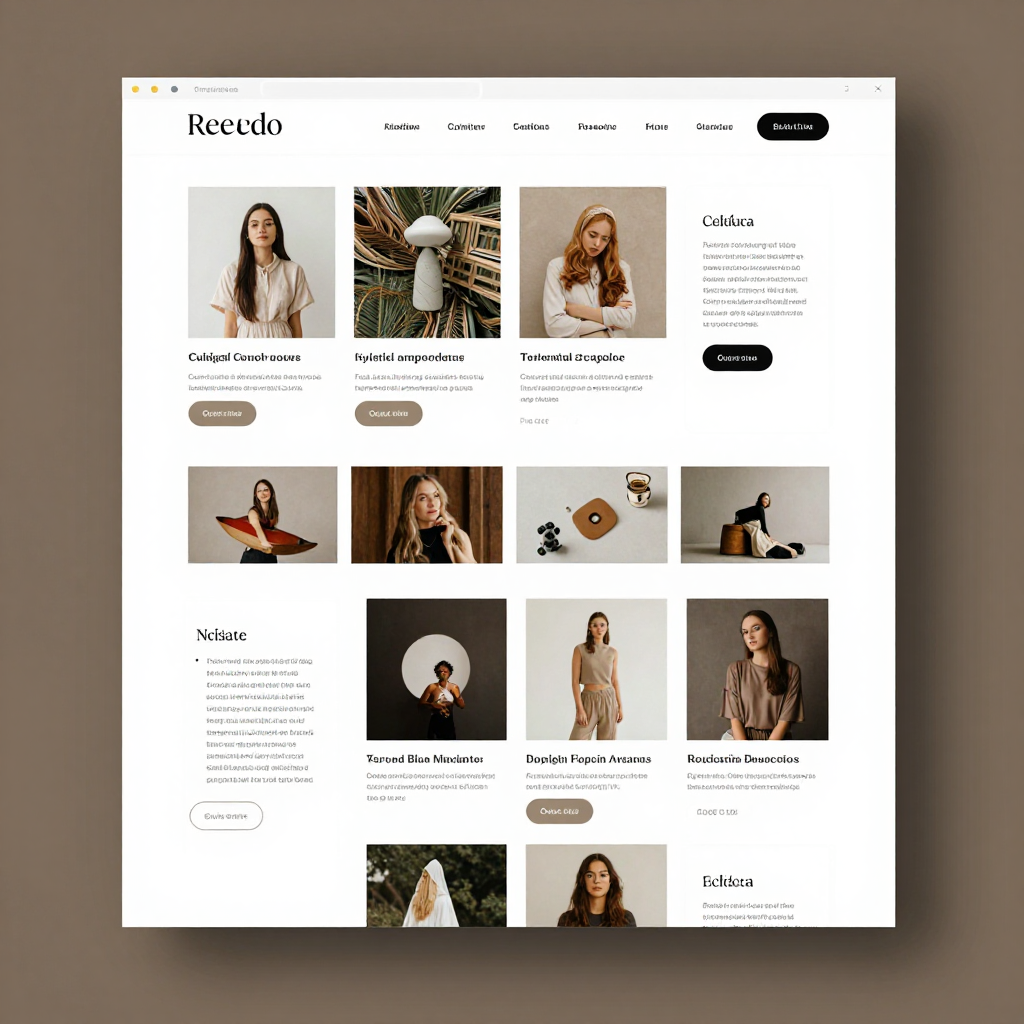
A memorable portfolio often follows a simple pattern: point of view, proof, and path. Point of view explains what makes the work distinctive. Proof shows the quality through selected projects. Path tells visitors what to do next, such as request a commission, view a full case study, or contact the artist.
Key Elements of a Strong Creative Personal Brand
A strong creative personal brand combines a clear niche, authentic values, a defined audience, consistent visual language, and a credible body of work. These elements should reinforce one another rather than appear as separate marketing exercises.
Creative niche and professional direction
Your niche can be defined by medium, subject, audience, industry, method, or a combination of these. “Photographer” is broad; “photographer creating quiet, natural-light portraits for independent publishers” communicates more direction. Your niche can evolve as your experience grows.
Values and creative identity
Values explain what guides your decisions. Sustainability, accessibility, cultural research, experimentation, intimacy, humor, or technical precision may shape your work. Choose values you can demonstrate through projects and process, not words that simply sound attractive.
Target audience
Audience awareness helps you communicate clearly without surrendering individuality. Identify the people who can meaningfully engage with your work: art directors, collectors, cultural organizations, small businesses, publishers, design studios, or communities with a shared interest.
Visual language and tone of voice
Visual identity includes composition, color, type, image sequencing, and the way you document your process. Tone of voice covers your biography, captions, proposals, and email communication. A thoughtful illustrator may use an observant, conversational tone, while a technical 3D artist may emphasize precision and material knowledge.
Biography and body of work
A useful biography answers three questions: what do you make, what informs it, and where does your work fit professionally? Keep the language specific. Mention relevant experience, exhibitions, publications, clients, training, or collaborations when they support credibility. The body of work must then substantiate the claims.
Practical Steps to Build Your Personal Brand
To build a personal brand, define your position, identify suitable opportunities, create simple guidelines, refine your portfolio, and review every public touchpoint for consistency. The process works best as a focused sequence rather than a complete visual redesign.
- Write a positioning statement. Complete this sentence: “I create [type of work] for [audience or context], using [distinctive approach], because [value or purpose].” Treat it as an internal guide first; it does not need to appear word-for-word on your website.
- Choose your next opportunities. List three project types, industries, or communities you want to reach during the next 12 months. This prevents your brand from becoming a vague description of every possible service.
- Audit your existing work. Divide projects into three groups: strongest and relevant, strong but off-direction, and weak or outdated. Feature the first group prominently, explain the second selectively, and remove the third.
- Create lightweight brand guidelines. Record your preferred typefaces, colors, image treatment, writing tone, biography length, and contact details. Two to four pages are usually enough for an individual creative professional.
- Build a portfolio narrative. Arrange projects so visitors understand your range and recurring concerns. Add concise context, your contribution, and any meaningful result without turning every page into a lengthy case study.
- Check consistency across platforms. Compare your portfolio website, social profiles, professional directory entries, email signature, and proposal documents. Update mismatched biographies, links, profile images, and outdated services.
Use a quarterly review rather than changing your identity every week. Ask whether recent work supports your positioning, whether the target audience is responding with useful questions, and whether your presentation still reflects your ambitions.
Using Online Platforms to Communicate Your Creative Identity
A portfolio website should act as the central home for your creative identity, while social media, email, and professional profiles extend its reach. Each platform should have a clear role instead of repeating the same content without purpose.
Your portfolio website offers the most control. It should make your strongest work easy to find, explain your approach, provide a current biography, and include a reliable contact route. A simple site with six excellent projects is often more persuasive than a complicated site with thirty poorly organized pages.
Social platforms can show activity, process, experiments, and personality. They are useful for discovery, but their algorithms and formats change. Keep important portfolio content on a platform you control, and use social channels to direct interested people toward deeper project information.
Email communication is part of your brand too. Clear subject lines, concise proposals, accurate timelines, and respectful follow-ups communicate professionalism more convincingly than promotional language. A professional profile on a relevant directory or network can reinforce credibility when it matches the information on your website.
The aim is coordination, not duplication. A behind-the-scenes sketch may belong on social media, the finished project and rationale on the portfolio website, and a focused project selection in a proposal.
Common Personal Branding Mistakes to Avoid
The most damaging personal branding mistakes are inconsistency, imitation, vague positioning, excessive promotion, and an outdated portfolio. Each one creates friction between your creative identity and the experience people have when evaluating your work.
Inconsistency across touchpoints
The error: Your website describes one practice while your social profile, biography, and visual presentation suggest another. People make this mistake while updating platforms at different times. The consequence is confusion and reduced professional credibility. Correct it by maintaining one source document with your current positioning, biography, links, and visual decisions.
Copying trends or another artist’s persona
The error: You imitate a popular aesthetic because it appears to attract attention. This often happens when visibility is mistaken for identity. The result is a brand that may look polished but feels interchangeable or disconnected from the work. Study trends for context, then keep only choices that serve your own creative point of view.
Trying to appeal to everyone
The error: You list every medium, service, and audience without showing a priority. People make this choice to avoid turning away opportunities, but a broad message can make it harder to understand your strongest value. Lead with a clear primary direction and mention secondary capabilities where they support it.
Promoting more than demonstrating
The error: Your online presence contains frequent announcements but little evidence of process or finished work. Promotion feels easier than curating, yet it rarely replaces proof. Balance announcements with project documentation, thoughtful explanations, and useful examples.
Leaving an outdated portfolio online
The error: Old services, weak student work, broken links, or unavailable projects remain visible. This happens because portfolio maintenance competes with paid creative work. Visitors may assume the outdated material reflects your current standard. Review your portfolio at least twice a year and after any major change in direction.
Frequently Asked Questions About Personal Branding for Creatives
Is personal branding important for artists and designers?
Yes. Personal branding helps artists and designers communicate their creative identity, professional direction, and distinctive point of view. It supports recognition and trust, although strong skills and a relevant body of work remain the foundation.
What should a creative professional include in a personal brand?
Include your niche, values, target audience, visual identity, tone of voice, biography, process, and selected body of work. These elements should appear consistently across your artist portfolio, portfolio website, and professional profiles.
How can an artist make their portfolio more memorable?
Curate fewer, stronger projects and connect them with a clear narrative. Add specific context about your role, decisions, materials, or process, then use consistent presentation so visitors remember both the work and the person behind it.
Should personal branding focus on the person or the creative work?
It should connect both. The creative work provides evidence, while the person’s values, process, and perspective provide context. The balance depends on the field: a commissioned illustrator may foreground services, while a fine artist may give more space to ideas and practice.
How often should a creative professional update their brand and portfolio?
Review the brand and portfolio every three to six months, with a deeper update once or twice a year. Make smaller changes when your services, audience, experience, or creative direction clearly shifts.
Personal branding gives creative professionals a practical way to make their work understandable without flattening its individuality. Define what you want to be known for, support it with a carefully curated artist portfolio, and let consistency develop through repeated evidence. The result is a professional identity that can grow with your practice while remaining recognizably yours.