How to Get Your Art Featured in Galleries and Online Publications
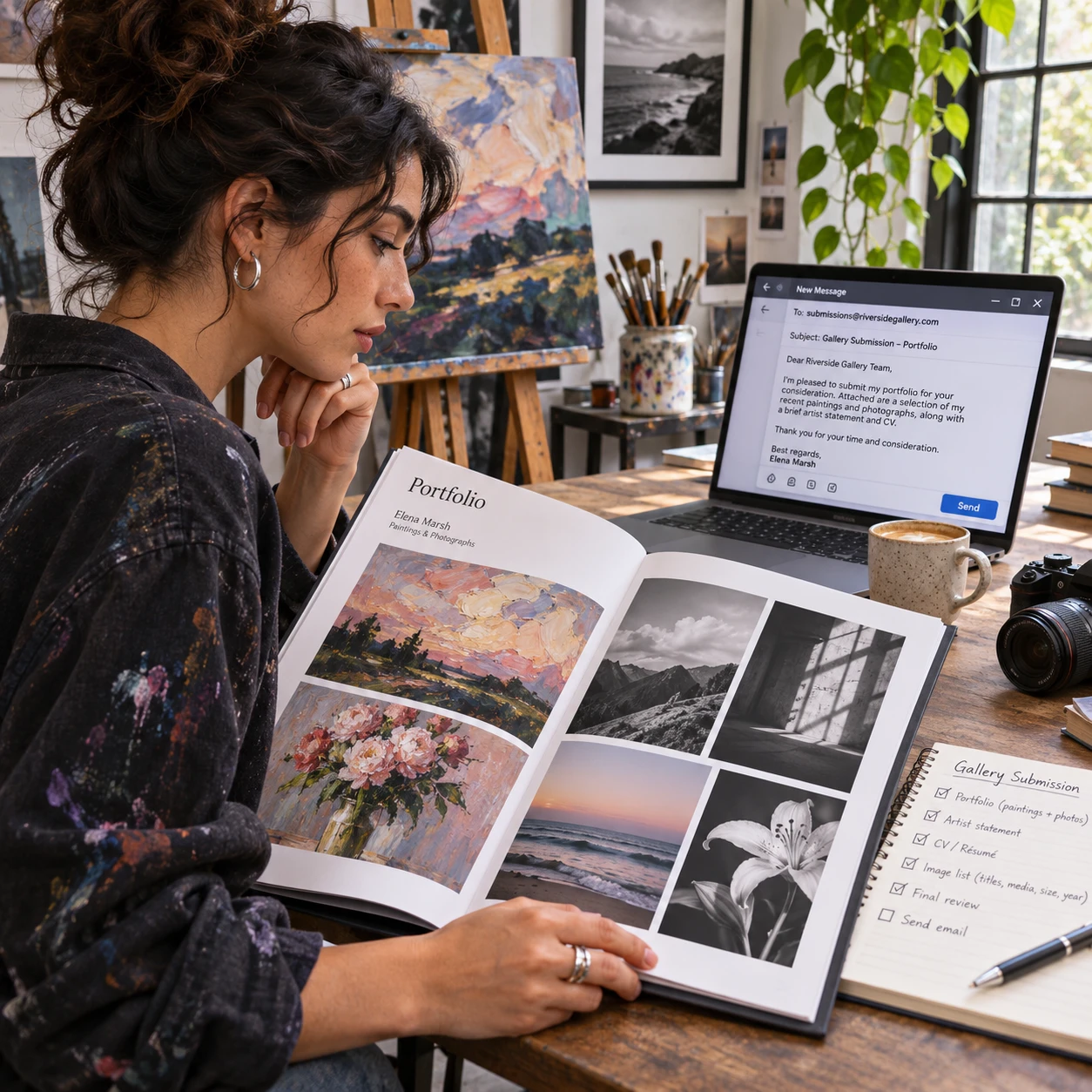
Getting your art in front of galleries and online publications starts with preparation, not a mass email. A focused artist portfolio, a clear submission package, and a thoughtful pitch help curators and editors understand your work and decide whether it suits their program or readership.
Gallery representation and editorial coverage are different opportunities. Galleries may consider exhibitions, sales, or an ongoing relationship; an online art publication may be looking for a feature, interview, or images for a specific story. The steps below help you approach each with care, without assuming that any pitch guarantees a yes.
Define what “the right fit” means for your work
The right gallery or online art publication has a program, audience, and visual approach that genuinely connect with your work. Researching that fit first helps you send fewer, more relevant submissions.
Start by looking at recent exhibitions, featured artists, and submission information. For galleries, note the media they show, the career stages they support, and whether they accept unsolicited submissions. For publications, review the kinds of artwork, interviews, and artist profiles they publish. A publication that covers experimental photography, for example, may be a stronger prospect for a photo series than a general arts outlet with no related coverage.
- Check the work: Does your medium, subject, or approach sit naturally alongside their recent selections?
- Check the audience: Would the gallery’s visitors or publication’s readers have a reason to engage with your work?
- Check the process: Are submissions open, and do you meet the stated requirements?
Make a shortlist and record why each recipient is a fit. This small step gives your submission email a specific point of connection. Avoid treating a respected name as a reason by itself to pitch. A poor match wastes your time and the curator or editor’s attention.
Build a portfolio that is ready to share
A share-ready artist portfolio presents a cohesive selection of work with clear images, useful captions, and easy-to-find contact details. It should let a curator or editor understand your practice without hunting for basic information.
Choose a focused group of recent or closely related works rather than showing everything you have made. A portfolio is a point of entry, not a complete archive. Arrange images in a deliberate order, and use consistent filenames that identify the artwork or series. Include captions with the title, year, medium, and dimensions where relevant.
Use high-quality artwork images that show color and detail accurately. Photograph or scan work in even light, crop cleanly, and avoid filters that change the appearance. For three-dimensional work, include more than one view when it helps explain form or scale. Keep large image files accessible through a clearly labeled portfolio page or a reliable link, and check that the link works on mobile and does not require an account.
Your portfolio site should also include a brief artist statement and a visible email address. Keep navigation simple. A recipient should be able to move from your work to your background and contact information in a few clicks. A polished portfolio helps; it cannot compensate for a mismatch with the recipient’s program.
Prepare a strong submission package
A strong submission package contains the materials a recipient requests, presented in a concise and consistent format. Most commonly, that means artwork images, an artist statement, an artist bio and CV, and practical details about the work.
Before sending anything, read the gallery submission guidelines or publication’s contributor instructions from start to finish. Requirements vary: one recipient may want a portfolio link, while another requests a small set of attachments or a proposal for a particular theme. Follow the requested file types, image limits, and subject-line format. If the guidelines say not to send attachments, do not attach them.
- Artist statement: Explain the ideas, materials, or questions behind the work in plain language. Keep it specific to your practice rather than relying on broad claims.
- Artist bio and CV: Include relevant exhibitions, education, awards, or publications, if applicable. Early-career artists can provide a short, accurate bio without trying to inflate credentials.
- Artwork details: Supply titles, dates, medium, dimensions, and any other information requested.
- Image files: Label them clearly and ensure they match the details in your captions or inventory.
For an editorial feature, consider adding a short note about why the work may interest that publication’s readers. For a gallery, clarify what you are proposing, such as consideration for an exhibition or a review of your portfolio. Keep the package easy to review; extra material is not automatically extra value.
Follow submission guidelines and pitch with care
To pitch your art effectively, follow the recipient’s instructions, write a brief personalized submission email, and make the next step clear. A curator or editor should quickly understand who you are, what you are sharing, and why it fits.
Use a direct subject line, such as “Portfolio submission: [Your name], mixed-media paintings” or the format specified in the guidelines. In the message, introduce yourself, identify the relevant series, and mention one concrete reason you chose that gallery or publication. Then provide the requested portfolio link or materials and a short closing with your contact details.
A useful submission email is often only a few short paragraphs. Avoid flattery that could be sent to anyone, long explanations of your entire career, and high-pressure language. Do not send a mass email with recipients visible to one another. Tailoring each pitch takes longer, but it shows that you understand the recipient’s work and gives your submission a clearer purpose.
Remember the distinction: a gallery submission asks an institution to consider your work within its exhibition or representation program; an editorial pitch proposes coverage for a publication’s audience. Do not frame a paid feature as guaranteed recognition. If a publication offers paid promotion, review what is included and how the feature will be presented before deciding whether it supports your goals.
Follow up professionally and keep records
Follow up only when the recipient’s guidelines allow it and the stated response period has passed. A brief, courteous message can bring a submission back to someone’s attention; repeated messages or pressure can damage a professional relationship.
Keep a simple submission log with the recipient, contact name, date sent, materials shared, response window, and outcome. This prevents accidental duplicate pitches and makes it easier to send a timely follow-up. If no response timeframe is given, allow a reasonable interval before sending one short check-in. If the guidelines say no follow-ups, respect that request.
For example, if an editor requests a portfolio link and says they will respond within four weeks, wait until that period has passed. Then reply in the original email thread with a short note asking whether they had a chance to review it. If you hear nothing after that, move on rather than sending a sequence of reminders.
Keep the tone warm and professional whether the answer is yes, no, or silence. A decline may reflect timing, space, or editorial direction rather than the quality of your work. Thank the person for their consideration, and do not argue with their decision.
Build visibility beyond a single pitch
Artists build visibility through a consistent, current portfolio and thoughtful participation in relevant art communities. Each pitch matters, but a durable presence makes it easier for galleries and publications to understand your work over time.
Update your portfolio when you have a meaningful new body of work, a publication, or an exhibition to add. Share projects with enough context for people to understand what they are seeing, and credit collaborators where appropriate. Attend openings, talks, and events that connect to your practice; genuine conversations can help you learn how a gallery or publication works, though they should not become a disguised demand for attention.
Keep the same accurate artwork details and professional contact information across your website, social profiles, and submission materials. Consistency builds trust and makes follow-up simpler. A practical routine is to review your portfolio quarterly, refresh images when needed, and make a short list of suitable opportunities before each outreach round.
There is no reliable shortcut to a feature or exhibition. The useful measure is whether each submission reaches an appropriate recipient with complete, well-presented work. That approach protects your time and gives your art a fair chance to be considered.
Frequently asked questions
What should an artist include in a gallery submission?
Include the materials requested in the gallery submission guidelines, often a portfolio link or selected artwork images, an artist statement, an artist bio and CV, artwork details, and contact information. Do not add unrequested files unless the gallery invites them.
How many artworks should I send?
Send the number specified by the recipient. If no limit is given, choose a small, cohesive selection that shows the strength and range of the relevant series without overwhelming the reviewer. A clear portfolio link can be more practical than attaching many large files.
Should I contact galleries and publications at the same time?
You can approach both, but tailor each submission to its purpose. A gallery pitch should address its exhibition or representation program; an editorial pitch should explain why the work suits the publication’s readers. Check for exclusivity or timing requirements before submitting the same work elsewhere.
When is it appropriate to follow up?
Follow up after the stated response window has passed, unless the recipient asks you not to. If no timeframe is provided, wait a reasonable period and send one concise message. Avoid repeated reminders.
What should I do if my submission is declined?
Thank the recipient and continue identifying suitable opportunities. If they offer specific feedback, consider it alongside your own goals; a decline does not automatically mean the work needs changing. Update your records and avoid resubmitting the same project unless invited or a new opportunity is clearly relevant.